
Warren Buffett Steps Down: The Investment Philosophy That Built Berkshire

SAHI
Warren Buffett isn’t just a name in finance; he’s the benchmark. For decades, his calm, fundamentals-first approach outpaced the noise of Wall Street. But now, at 94, the man behind Berkshire Hathaway is finally stepping down as CEO, passing the reins to Greg Abel.

So what happens when the world’s most iconic value investor walks away from day-to-day operations?
This piece isn’t about nostalgia. It’s about legacy and the strategy that built one of the most successful investment track records in history. Whether you’re a long-term investor or a trader trying to learn what not to do, Buffett’s philosophy has lessons for everyone.
Warren Buffett didn’t build his fortune by timing the market or chasing trends. His edge was discipline. He looked at stocks the way others look at businesses, not as price tickers, but as living, breathing enterprises.
“I am a better investor because I am a businessman, and a better businessman because I am an investor.”
Here’s how his philosophy holds up:
-
Buy Businesses, Not Just Stocks
Buffett approached every investment as if he were buying the entire company. He dug into financials, leadership, brand power, and competitive edge, not just short-term price action. -
Economic Moats Matter
His favorite businesses had something others couldn’t easily copy: a powerful brand (Coca-Cola), network effects (Apple), or customer loyalty (American Express). Moats protected long-term profits. -
Be Patient, Not Predictive
Buffett wasn’t in a rush. “Our favorite holding period is forever,” he often said and he meant it. He let compound interest and quality do the work. -
Margin of Safety Is Non-Negotiable
He never paid full price. If the intrinsic value was $100, he waited until the market offered it at $70. That buffer protected him from being wrong. -
Circle of Competence
Buffett didn’t try to be an expert on everything. If he didn’t understand the business model in a few minutes, he passed. “The most important thing in investing is not how much you know; it’s knowing what you don’t know.” -
Trust the Cash, Not the Story
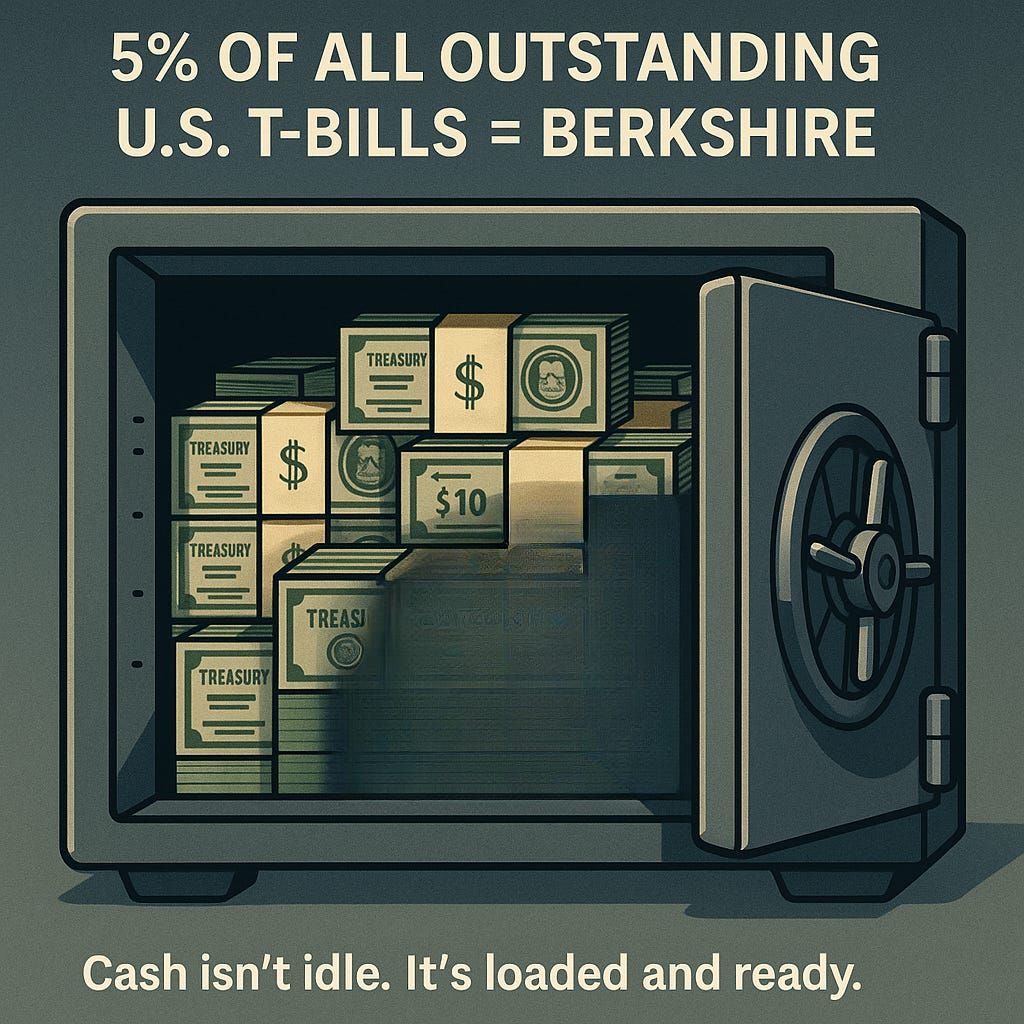
Even today, Buffett holds over 5% of all outstanding U.S. Treasury bills, preferring safety and liquidity over risky bets. It’s a reminder: he never forced a trade. If nothing looked attractive, he waited with cash.
Before Buffett buys, he asks one simple question: “Would I be happy owning this if the stock market shut down for 10 years?”
If the answer is yes, it clears the first hurdle.
Here’s what his checklist looks like: not flashy, but timeless.
-
Return on Equity (ROE)
Buffett favors businesses with a high and consistent ROE over time, ideally above 15%. It tells him the company is using its capital efficiently to generate profits without excessive debt. -
Debt-to-Equity Ratio
Too much debt makes earnings unstable. He avoids companies that rely heavily on borrowed money to grow. He once said, “If you're smart, you don't need leverage; and if you're dumb, it will ruin you.” -
Profitability Track Record
A great business doesn’t just have one good year; it has a decade of them. Buffett loves predictable earnings. That’s why he avoids turnarounds: “Turnarounds seldom turn.” -
Management That Thinks Like Owners
Buffett invests in people as much as numbers. He looks for CEOs who care about long-term value creation, not quarterly bonuses. Accountability and integrity matter more to him than charisma. -
Moats, Moats, Moats
Can the company raise prices without losing customers? Does it dominate a niche? If competitors can’t easily take share, Buffett pays attention. -
Valuation vs. Intrinsic Value
Everything comes down to price. Even a great business isn’t a buy at any price. Buffett uses discounted cash flow (DCF) to estimate what the company is really worth, then waits for the market to offer it at a discount.
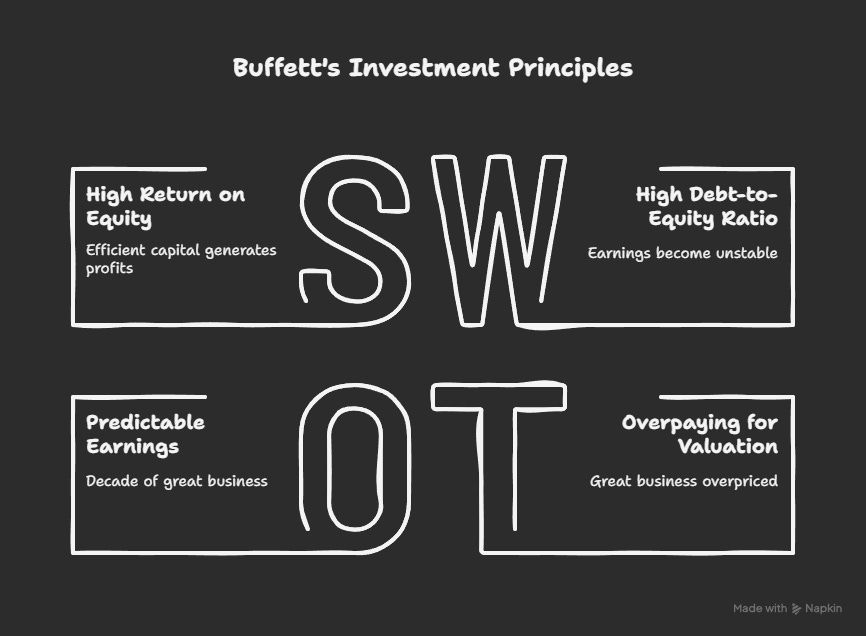
These aren’t hard rules. But together, they form a system, one that filters out hype and keeps him focused on businesses built to endure.
Warren Buffett’s portfolio isn’t built on dozens of bets. It’s made of a few big, well-researched convictions. Here are three moves that defined his strategy:
In the late ’80s, Coca-Cola was facing short-term market skepticism. But Buffett saw a company with
-
Unmatched brand loyalty
-
Global distribution scale
-
Pricing power across generations
He bought $1.3 billion worth of stock, nearly 7% of the company at the time. Thirty years later, that stake pays over $700 million in dividends annually. He once said, “If you gave me $100 billion and said, ‘Take away Coca-Cola’s dominance, I’d give it back.”
Buffett long avoided tech. But with Apple, he saw more than gadgets; he saw a consumer products company with sticky customers.
-
He admired Apple’s ecosystem moat and recurring revenue from services.
-
Berkshire’s stake is now worth over $170 billion, making it his largest holding.
-
And he famously called the iPhone “probably the best product I know in terms of consumer behavior.”
After the “Salad Oil Scandal” in the 1960s tanked Amex stock, most investors ran. Buffett leaned in.
-
He saw trust in the brand as more valuable than the scandal.
-
That contrarian bet became one of his earliest successes, showing how he used crises as entry points, not exit doors.
Buffett’s genius isn’t just in what he bought; it’s in what he didn’t buy. He’s skipped entire manias (dot-com, crypto) and held cash when everyone else chased returns.
But that doesn’t mean he didn’t adapt.
For decades, Buffett avoided tech, calling it outside his “circle of competence.”
But with Apple, Amazon (briefly), and more recently, Snowflake (via Todd Combs), he acknowledged tech’s economic moats if the business model made sense.
This wasn’t a shift in core philosophy. It was the same lens, “buy great businesses at fair prices,” applied to new sectors.
As of 2024, Berkshire Hathaway owns over 5% of all outstanding U.S. Treasury bills a staggering figure that shows how Buffett plays defense when assets are overpriced.
He once quipped,
“Cash is like oxygen you don’t notice it until it’s gone.”
By holding T-bills, he preserves flexibility ready to pounce when fear grips the market and value reappears.
Whether it was the 2008 crisis or the 2020 COVID crash, Buffett has consistently reminded investors that
“The stock market is designed to transfer money from the active to the patient.”
Even when Berkshire’s portfolio underperforms in overheated bull runs, Buffett is unapologetic. He’s not here to win every month; he’s playing the decades.
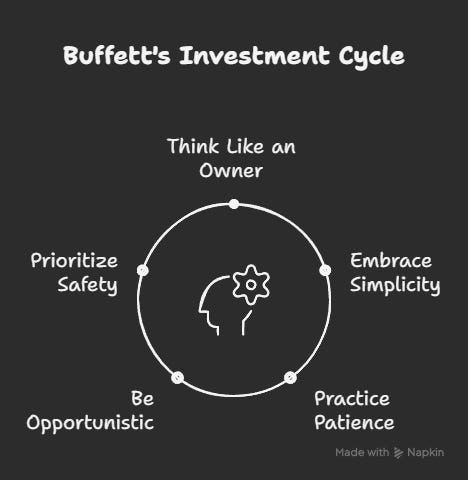
Warren Buffett’s success isn’t magic. It’s a blend of timeless principles and brutal discipline. Here’s what his journey teaches us not just for long-term investing, but for building a mindset that survives any market cycle.
Don’t treat stocks as lottery tickets. Look under the hood. Ask:
Would I want to own this business if the market shut for 10 years?
“Buy into a company because you want to own it, not because you want the stock to go up.”
Buffett avoided complex derivatives, trendy trades, and flashy startups. His focus: businesses that make money, year after year, with management he trusts.
Don’t overcomplicate understanding what you buy.
Berkshire has sat on billions in cash, waiting.
In markets, waiting is often harder than acting. But as Buffett says:
“The market is there to serve you, not instruct you.”
Some of Buffett’s best buys came during crashes at Goldman Sachs in 2008 and Apple in its downcycles.
The crowd panics. He shops.
“Opportunities come infrequently. When it rains gold, put out the bucket, not the thimble.”
His “margin of safety” principle means only buying when there’s a cushion a mispricing that protects you if things go wrong.
It’s not about maximizing returns, but minimizing regret.
Buffett’s retirement marks the end of an era, but not the end of his wisdom.
He didn’t just build a portfolio; he built a philosophy. One that reminds us that real wealth is built slowly, thoughtfully, and with conviction. Whether you’re buying a stock, running a business, or just deciding what to do with your next paycheck, a bit of Buffett never hurts.