
LG Electronics India Enters Post-IPO Phase as Anchor Lock-In Ends

Team Sahi
LG Electronics India share quietly entered an important post-IPO phase one that could shape near-term price action more than any earnings headline.
The company’s three-month IPO anchor lock-in has officially ended, making nearly 1.5 crore additional shares eligible for trading in the open market.That’s roughly 2% of LG India’s total outstanding equity, suddenly unlocking fresh liquidity that can reshape supply, volatility, and sentiment.
While this doesn’t mean shares will flood the market instantly, it does change the game.
Let’s decode what it really means.
What Exactly Changed Today?
During LG Electronics India’s IPO in October 2025, a large chunk of shares were allocated to anchor investors who committed capital before the public issue opened.
SEBI rules mandate lock-in periods for these investors to ensure post-listing stability:
| Lock-In Phase | Shares Released |
|---|---|
| 30 Days (Nov 9, 2025) | 50% of anchor shares |
| 90 Days (Jan 8, 2026) | Remaining 50% |
With today’s unlock, the entire anchor allotment is now free to trade.
Net effect: ~1.5 crore additional shares are now eligible to hit the market.
They may not sell immediately but they can.
Fresh institutional supply entering the market can create short-term downward pressure as selling supply increases.
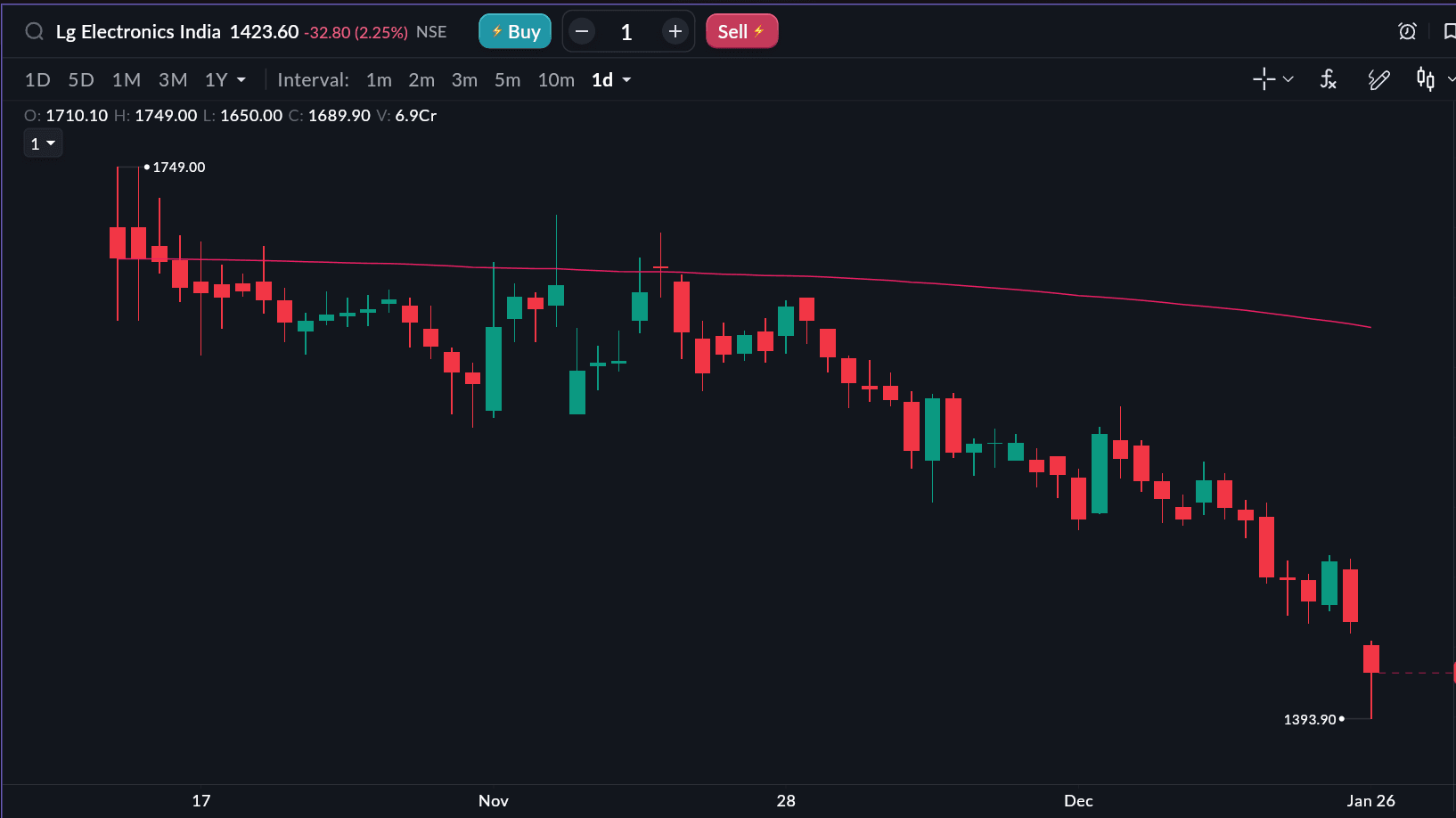
Where Does LG India Stock Stand Today?
LG India has already been through a full market cycle in just three months:
| Price Point | Level |
|---|---|
| IPO Issue Price | ₹1,140 |
| Listing High (Oct 13, 2025) | ₹1,749 |
| Current Market Price | ~₹1,455 |
Still up ~28% from IPO
But down ~17% from listing highs
This tells an important story:
The stock has already corrected meaningfully but still trades at a premium to its IPO valuation.
Why Anchor Unlocks Matter So Much
Anchor lock-in expiries are not bad news.
They are simply liquidity events but liquidity changes behaviour.
Three outcomes usually play out:
- Short-Term Supply Pressure
If even a fraction of anchors book profits, the added sell-side supply can cap rallies temporarily. - Higher Volatility
More floating shares = faster reactions to news, earnings, and market flows. - Better Price Discovery
With institutional shares now fully tradable, the market gets a cleaner valuation signal.
But What About LG’s Business Fundamentals?
That’s where things get interesting.
Q2FY26 Snapshot
| Metric | Result |
|---|---|
| Revenue | ₹6,174 Cr (↑ 1% YoY) |
| Net Profit | ₹389 Cr (↓ 27% YoY) |
| EBITDA | ₹547 Cr (↓ 28% YoY) |
| EBITDA Margin | 8.9% (↓ 350 bps) |
Higher costs compressed margins, pulling profits down despite stable revenues.
Segment performance:
- Home Appliances → Flat
- Home Entertainment → Growing
Brokerages remain structurally positive on LG India’s long-term market positioning but near-term margin pressure is now a valuation variable.
What Should Retail Investors Watch Now?
Instead of guessing whether anchors will sell, track price behaviour:
| Signal | What It Means |
|---|---|
| High volumes + flat price | Distribution / supply absorption |
| Sharp dips with recovery | Strong institutional demand |
| Rising volumes + breakout | Anchor selling getting absorbed cleanly |
Also monitor (as of January 2026 levels):
- Support near ₹1,400 zone
- Reaction around ₹1,500–1,520 supply band
- Margin trend in upcoming quarters
Final Take
The anchor lock-in expiry is not a warning, it's a phase transition.
LG India is now fully in the hands of the open market.
Price discovery begins. Volatility returns.
And true long-term valuation starts to form.
For traders this creates opportunity.For investors this creates clarity.
Either way, LG Electronics India has just entered its real post-IPO chapter.