
US Fed Cuts Rates by 25 bps in December 2025: What It Means for India

The US Federal Reserve delivered its third consecutive rate cut of 2025 on December 10, lowering the federal funds target range by 25 basis points to 3.5%–3.75% from an earlier target of 3.75-4.0%. The move came against a backdrop of slowing US economic growth, rising unemployment risks, and inflation that remains above comfortable levels.
With financial markets pricing in probability of a cut, the decision largely aligned with expectations but the underlying message from the Federal Open Market Committee (FOMC) was far more nuanced.
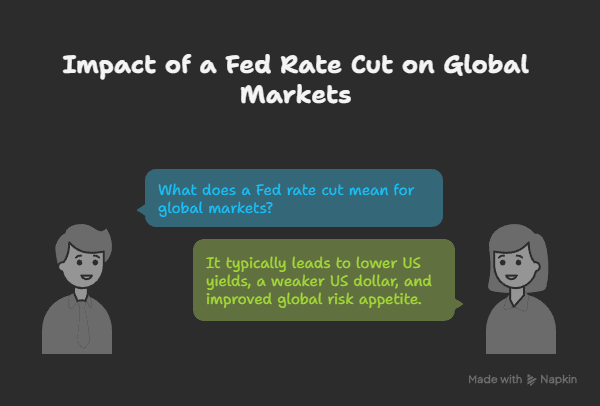
What Does a Rate Cut Mean for Global Markets
A Fed rate cut typically leads to:
- Lower US yields, pushing investors to seek higher returns elsewhere.
- A weaker US dollar, especially against emerging-market currencies.
- Improved global risk appetite, benefiting equities and commodities.
Why the Fed Cut Rates: Mixed Data, Rising Risks
The FOMC statement described the US economy as expanding “moderately,” but job gains have slowed, and unemployment edged up through September. Inflation hit 3% in September, higher than the Fed would like. This makes it harder for the Fed to support job growth while keeping prices under control.This wasn’t a unanimous decision:
- One member pushed for a deeper 50 bps cut, signaling concern about deteriorating labor-market data.
- Two members preferred no cut at all, citing stickiness in inflation.
This split highlights a deep divide within the Fed on how aggressively to ease policy from here. But the divided committee and sticky inflation may limit how much global liquidity the Fed is willing to inject over the next few quarters.
Fed Chair Jerome Powell reinforced this uncertainty, repeating that future moves will remain “data dependent” and avoiding any commitment to additional cuts in early 2026. Powell also noted that reserve balances are now at ample levels, prompting planned Treasury purchases to support liquidity management across the system.
A Slowing US Economy: The Macro Setup Behind the Cut
Although the US economy continues to grow, several indicators point to increasing downside risks:
- Hiring momentum has cooled significantly.
- Firms are seeing slower wage pressures but weaker demand.
- Inflation remains elevated enough to prevent the Fed from easing aggressively.
Markets reacted calmly because the cut was widely expected. Futures had already priced in an 88% chance of a 25 bps reduction, so traders weren’t surprised. You could see this in the limited market moves the S&P 500 rose just 0.7%, the Nasdaq gained 0.3%. These moderate gains show that most of the news was already factored into prices.
Impact on India: Why This Cut Matters for Nifty, Rupee, and RBI
The Fed’s December cut is potentially positive for India, especially if global risk appetite continues to improve.
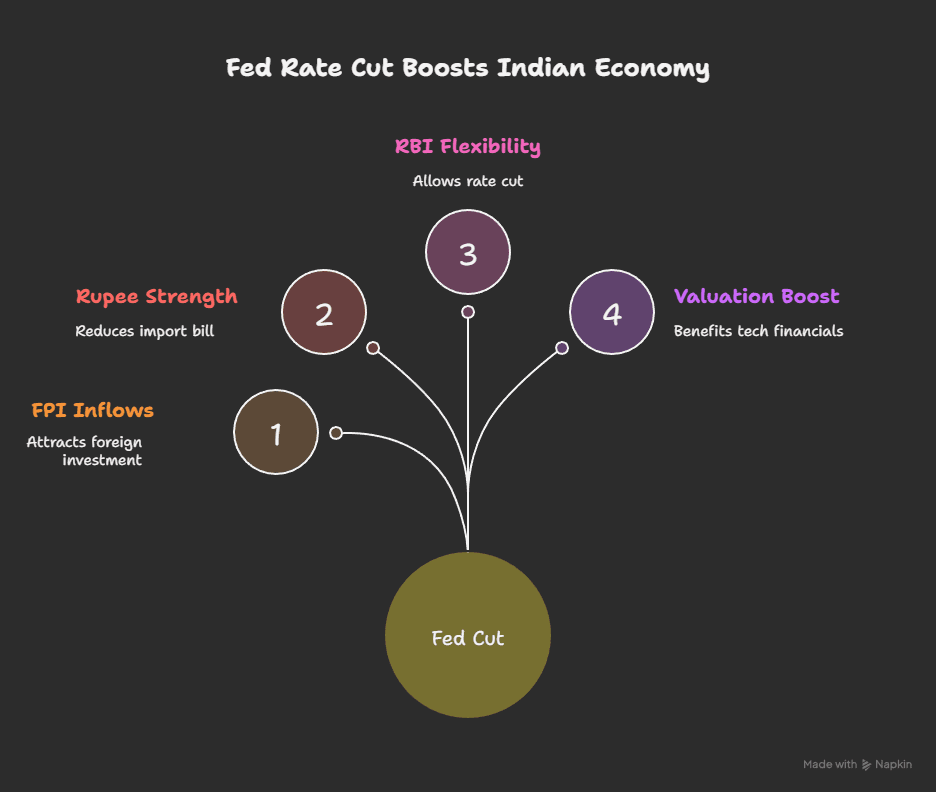
1. Foreign Portfolio Inflows May Accelerate
Lower US yields make India’s higher-return markets more attractive. This can boost:
- Indian equities, especially IT, BFSI, and high-beta sectors
- Government bond demand, pushing yields lower
Historically, Fed easing cycles have coincided with strong FPI flows into India.
2. Rupee May Strengthen Against the Dollar
A softer dollar typically supports the rupee. This can reduce:
- India’s import bill
- Oil-related inflation pressures
A stronger rupee may not boost earnings directly, but it can improve demand sentiment for IT and other USD-linked sectors by signalling economic stability and healthier global conditions.
3. RBI May Get Space to Cut Rates
If inflation remains under control, India’s central bank could consider easing in 2026. Fed cuts reduce the risk of capital flight, giving RBI more flexibility.
This could:
- Lower borrowing costs
- Encourage capex and housing demand
- Improve domestic liquidity
4. Valuation Boost for Indian Tech & Financials
US rate cuts typically support higher global tech valuations. Indian IT companies benefit from:
- A stable US economy (their biggest client market)
- A potentially weaker dollar lifting competitiveness
- Better risk sentiment across global equities
Financials could see cheaper funding costs and increased credit appetite.
The Bottom Line: A Cautious Cut, but Positive for India
The December 2025 Fed rate cut isn’t a clear shift toward easier policy.Instead, it reflects a careful, divided, and data-dependent approach as the US balances slowing growth with persistent inflation.
For India, though, the implications are largely constructive:
- Higher foreign inflows
- Stronger rupee
- Possible RBI policy room
- Boost to equities, especially IT and BFSI
As global liquidity cycles turn, India remains one of the strongest emerging-market destinations for capital positioned to benefit from both macro stability and structural growth momentum.